SUARE-II Kickoff: Successful Start to the Second Project Phase at DIW Berlin
News of October 12, 2026
On October 8 and 9, the team behind the research project “Longitudinal Study on Refugees from Ukraine in Germany (SUARE)” met at DIW Berlin to kick off the second phase of the project.
SUARE tracks individuals who have fled to Germany as a result of Russia’s war of aggression against Ukraine and collects important data on their living conditions, labor market integration, health, family, and education. By integrating the data into the Socio-Economic Panel (SOEP) and the IAB-BAMF-SOEP survey of refugees, the study enables comparisons with other migrant groups in Germany. The project is funded by the German Research Foundation (DFG).
The kick-off event at the DIW began with a keynote address by Prof. Vilde Hernes (Oslo Metropolitan University) on the political reactions to the arrival of Ukrainian refugees in Europe.
The second funding phase is taking place against the backdrop of the ongoing war. “The outlook for Ukrainian refugees remains uncertain—not only because of the uncertainty surrounding the terms of a possible ceasefire, but also due to the constantly changing political conditions in the host countries,” emphasized Prof. Hernes.
In the second funding phase of SUARE, a key focus is on the long-term consequences of family changes resulting from displacement, particularly for the development of children and adolescents. The study examines educational and health trajectories, psychosocial well-being, experiences of discrimination, and access to health care. Discussions with the invited experts yielded concrete proposals ranging from new questionnaire items to data linkage and collaboration with other studies.
On the SOEP side, the project is led by Prof. Sabine Zinn, Dr. Elena Sommer, Dr. Louise Biddle, and Prof. Adriana Rocío Cardozo Silva (Hannover University of Applied Sciences and Arts). At the Institute for Employment Research, Prof. Yuliya Kosyakova and Dr. habil. Kseniia Gatskova are in charge.
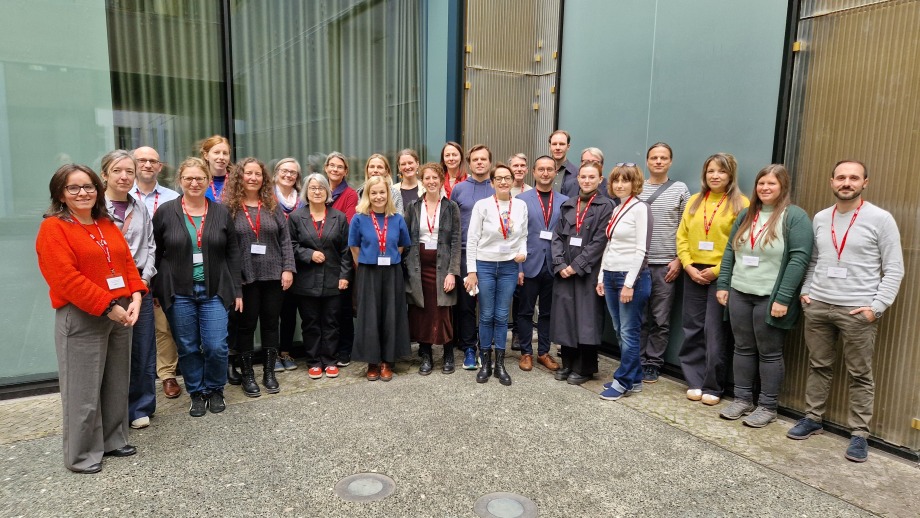
Project Team at the SUARE I/II Kick-Off Meeting
© DIW Berlin
