December 8, 2025
DIW-OECD Industrial Strategy Dialogue
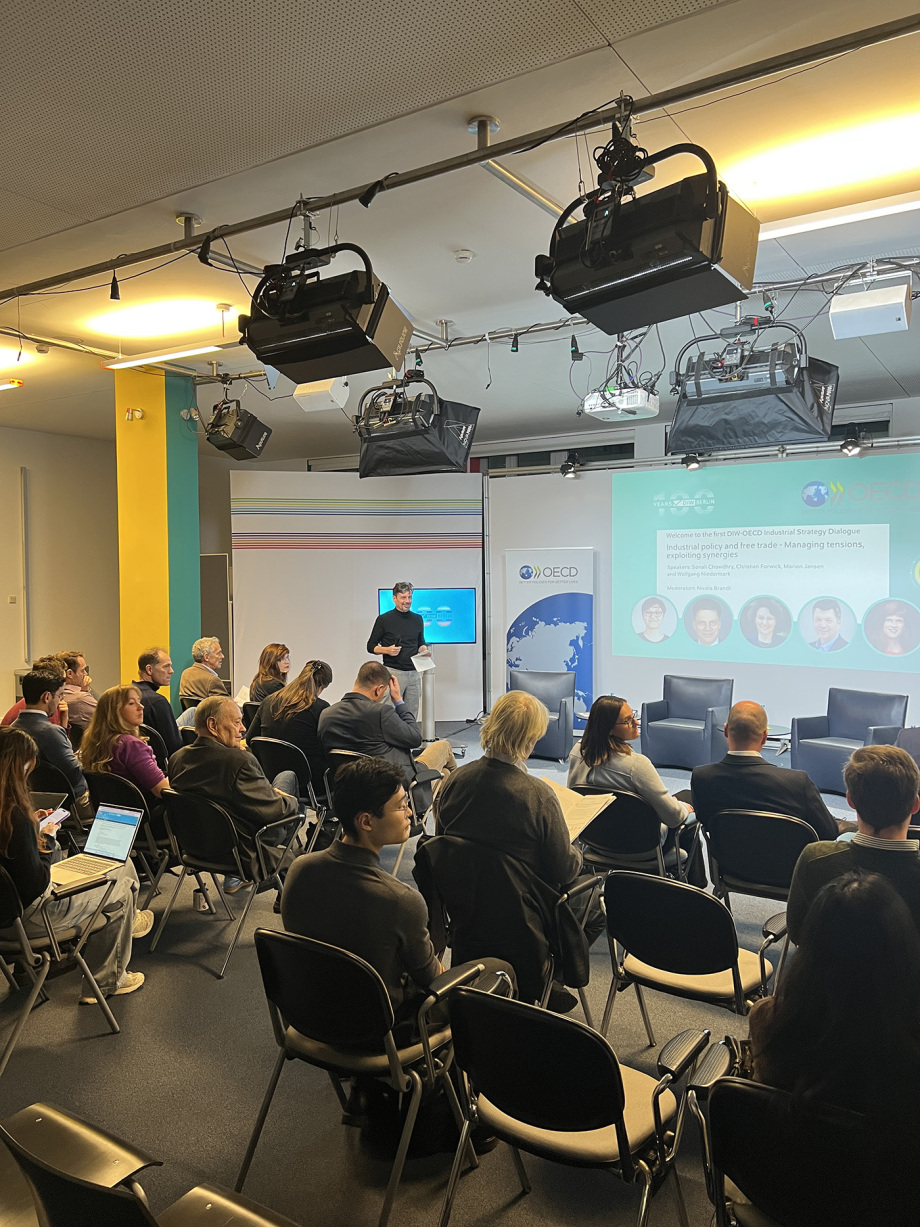
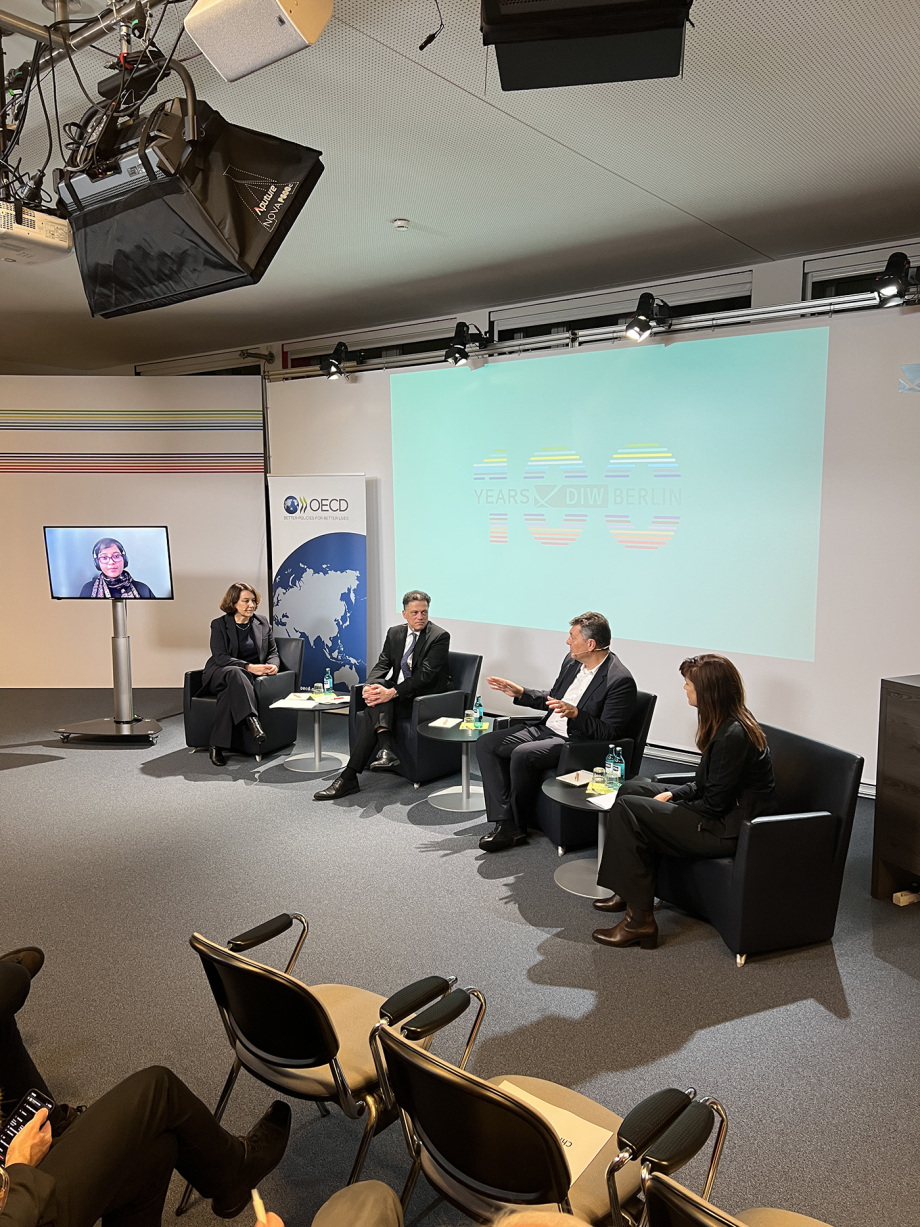
Industrial policy and free trade – Managing tensions, exploiting synergies
Date
December 8, 202516:00-17.30 Uhr
Location
Elinor Ostrom HallDIW BerlinAnton-Wilhelm-Amo-Strasse 5810117 BerlinSpeakers
Nicola Brandt, Christian Forwick, Marion Jansen, Wolfgang Niedermark, Sonali ChowdhryFree, fair, and diversified trade plays a crucial role in the development of new technologies and thus also in the success of industrial and innovation policy strategies. Access to critical raw materials and other inputs, such as semiconductors or steel scrap, is often a prerequisite for the development of new technologies, including in the important areas of digitalization and decarbonization. At the same time, access to international markets is crucial – especially for smaller open economies – in order to achieve economies of scale and thus quickly enhance cost efficiency of new technologies. However, by subsidizing technologies that have not yet reached market maturity, industrial policy can unintentionally distort global competition and fuel ongoing trade disputes. Overall, countries around the world are preparing for a more protectionist global environment. Many are attempting to become less dependent on critical imports by building up domestic industries and promoting a more circular economy. The roundtable will discuss how OECD countries and partners can work together more effectively to better leverage the synergies between successful industrial policy strategies and open global markets, while managing tensions. How can access to critical inputs and markets be improved by establishing and expanding trade partnerships? What ways are there to promote the development of new technologies in a way that distorts international competition as little as possible, and when shift comes to shove how can trade disputes around industrial policies be resolved?
Please register here for your virtual or personal participation.
Event Review
 play_arrow
Watch video
play_arrow
Watch video
The video is hosted on an external platform (YouTube).
By playing the video, you leave DIW Berlin’s website.
More information in our Privacy Policy.
LIVESTREAM: Industrial policy and free trade – Managing tensions, exploiting synergies
Speaker
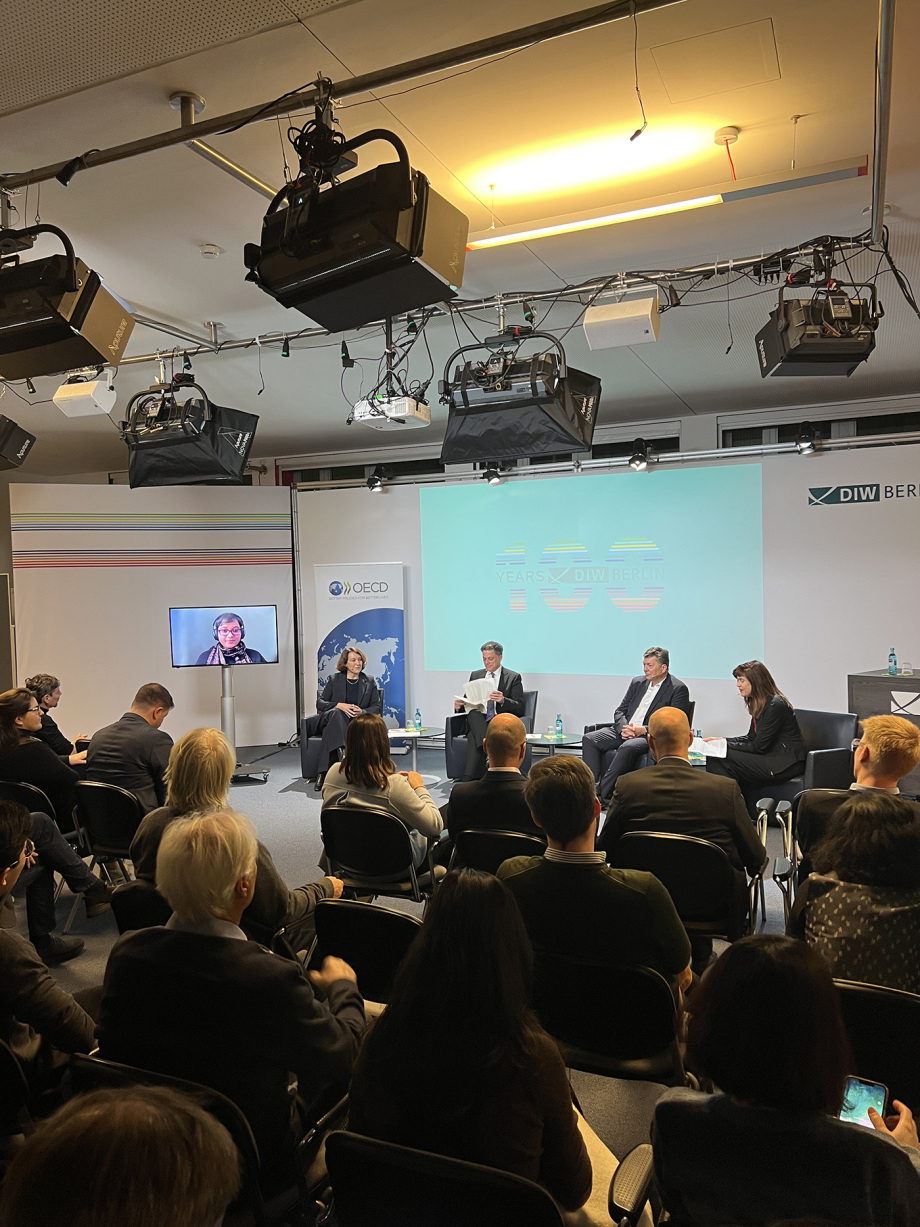
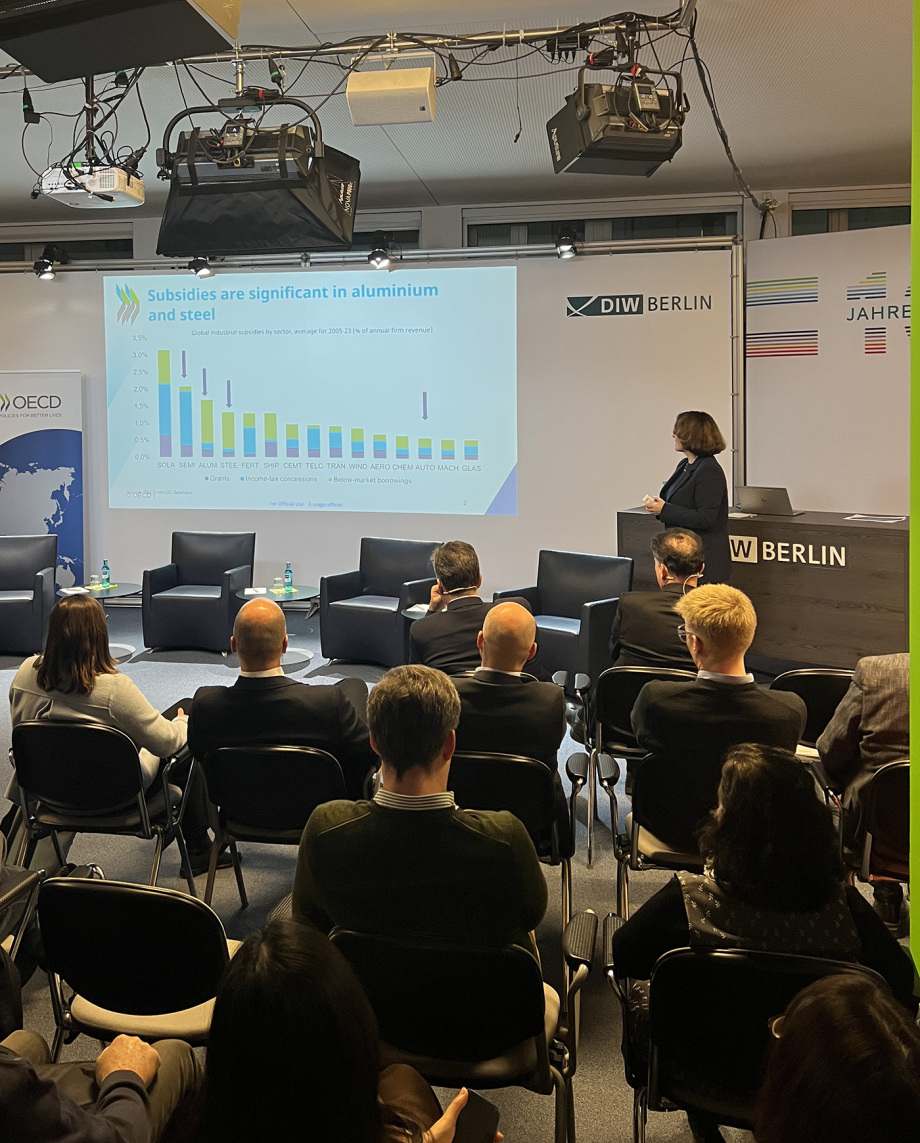
Presentation: Marion Jansen, Director of the Trade and Agriculture Directorate at OECD
Discussion:
Sonali Chowdhry, DIW Berlin (online)
Christian Forwick, Head of Department for Foreign Trade Policy,Federal Ministry for Economic Affairs and Energy
Wolfgang Niedermark, Member of the Executive Management Board, BDI
Moderated by: Nicola Brandt, OECD Berlin Centre
Successful industrial strategies require well-designed policies that coordinate many areas, ranging from trade, competition, technology and innovation policies to standards setting, regulation and skill development. The Berlin-based DIW-OECD industrial strategy dialogues bring together key stakeholders from policy, business and think-tanks to discuss cutting-edge research and what works for Germany, Europe, and their global partners.