November 6, 2025
DIW Europe Lecture
The Downside of Fertility
DIW 100 Lecture - Keynote Speech by Nobel Prize Laureate Claudia Goldin
Date
November 6, 20251:30 p.m. - 3:00 p.m.
Location
Elinor Ostrom HallDIW BerlinAnton-Wilhelm-Amo-Strasse 5810117 BerlinSpeakers
Claudia Goldin, Bernd Fitzenberger, Katharina Wrohlich, Marcel FratzscherThe fertility decline is everywhere in the world today. Moreover, the decline goes decades back in the histories of rich countries. Birthrates have been below replacement in the U.S. and Europe since the mid-1970s, although further declines occurred after the Great Recession. The reasons for the declines from the 1970s to the early 2000s involve greater female autonomy and a mismatch between the desires of men and women. Men benefit more from maintaining traditions; women benefit more from eschewing them. When the probability is low that men will abandon traditions, some career women will not have children and others will delay, often too long. The fertility histories of the U.S. and those of many European and Asian countries speak to the impact of the mismatch on birth rates. The experience of middle income and even poorer nations may also be due to related factors. Various constraints that I group under “matching” problems have caused fertility to be lower than otherwise and imply that fertility has a “downside.”
Event Review
 play_arrow
Watch video
play_arrow
Watch video
The video is hosted on an external platform (YouTube).
By playing the video, you leave DIW Berlin’s website.
More information in our Privacy Policy.
Video Review: The Downside of Fertility: DIW 100 Lecture - Keynote Speech by Nobel Prize Laureate Claudia Goldin
Speaker
Claudia Goldin is the Henry Lee Professor of Economics at Harvard University and holds the Lee and Ezpeleta Professorship of Arts & Sciences at Harvard University. She was the director of the NBER’s Development of the American Economy program from 1989 to 2017 and is a co-director of the NBER's Gender in the Economy group. Goldin was awarded the 2023 Sveriges Riksbank Prize in Economic Sciences in Memory of Alfred Nobel “for having advanced our understanding of women’s labour market outcomes.”
Bernd Fitzenberger has been the director of the IAB since September 2019, and Professor of Quantitative Labor Economics at Friedrich-Alexander-Universität Erlangen-Nürnberg since October 2020. He studied economics, mathematics and statistics at the University of Konstanz in Germany and Stanford University in the USA. In 1993, he graduated from Stanford University with a PhD in Economics. In 1998, he completed his postdoctoral habilitation at the University of Konstanz and was appointed Professor of Economics, esp. Social Policy at TU Dresden. From 1999 to 2004 he held the Chair of Econometrics at the University of Mannheim, from 2004 to 2007 he held the Chair of Economics, esp. Labor Economics, at Goethe University Frankfurt and from 2007 to 2015 the Chair of Statistics and Econometrics at the University of Freiburg. From 2015 to 2020, Bernd Fitzenberger was Professor of Econometrics at Humboldt-Universität zu Berlin.
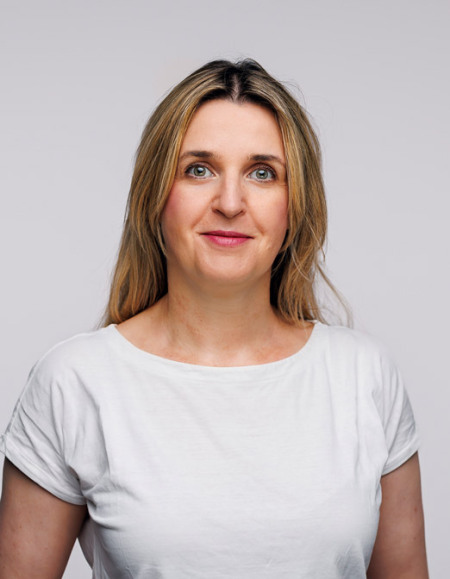
Katharina Wrohlich is Professor of Public Finance, Gender and Family Economics at the University of Potsdam and Head of the Gender Economics Research Group at the German Institute for Economic Research (DIW Berlin). Her research focuses on the evaluation of labor market, family and tax policy on employment and wages of women. Moreover, she is working on the issue of gender gaps in the labor market, in particular in terms of wages and leadership positions. Before joining the gender economics research group at DIW, Katharina was research associate (2002-2012) and deputy head (2012-2016) of the public economics department at DIW Berlin. She finished her PhD at the Free University of Berlin in 2007. Prior to her doctoral studies, she studied at the University of Vienna and at Georgetown University in Washington, D.C. She is a member of the scientific advisory board of the Institute for Employment Research (IAB) and the Austrian Institute of Economic Research (WIFO).