26. Mai - 4. Juni 2026
Vortrag
Introduction to Bayesian Macroeconometrics
Termin
26. Mai - 4. Juni 2026May 26, 27, 28 and June 2, 3, 4
The lecture is each day from 09:00-10:30 and 11:00-12:30
Ort
Elinor Ostrom HallDIW BerlinAnton-Wilhelm-Amo-Strasse 5810117 BerlinSprecher*innen
Frank SchorfheideThe starting point of this course is a self-contained introduction to Bayesian estimation and inference. We proceed with the Bayesian estimation of reduced-form vector autoregressions, discussing popular families of prior distributions and how to sample from the resulting posterior distributions.
Next, we move from reduced-form to structural VARs. We show how Bayesian inference can be implemented for several popular identification schemes.
In the final step, we use functional VARs to model the dynamic of cross-sectional densities. The last part of the course is devoted to the Bayesian estimation of DSGE models: likelihood evaluation with Kalman filter, posterior sampling using a Metropolis-Hastings algorithm and sequential Monte Carlo algorithm.
Topics
Day 1: Introduction to Bayesian inference
Day 2: Estimation of reduced-form VARs
Day 3: Estimation of structural VARs
Day 4: Estimation of functional VARs
Day 5: Estimation of DSGE Models
Day 6: Estimation of DSGE Models
Prerequisites
Students are expected to be familiar with econometrics/statistics and macroeconomics at the master’s level and at the same time be enrolled in “Advanced Macroeconomic Analysis II (PhD Level)” co-taught by Prof. Chi Hyun Kim and Prof. Ben Schumann. No familiarity with Bayesian econometrics is required, as the course will start with a brief introduction to Bayesian econometrics.
Only advanced doctoral students with a background in time series analysis are permitted to take this course without being enrolled in "Advanced Macroeconomic Analysis II (PhD Level)". If this applies to you, please note the registration information below.
Readings
Del Negro, Marco, and Frank Schorfheide, Bayesian Macroeconometrics, Geweke, Koop, and van Dijk (eds.) The Oxford Handbook of Bayesian Econometrics, 2011, Oxford University Press, 293-389.
Herbst, Edward and Frank Schorfheide (2015): Bayesian Estimation of DSGE Models, Princeton University Press, Princeton. https://web.sas.upenn.edu/schorf/companion-web-site-bayesian-estimation-of-dsge-models/.
Fernandez-Villaverde, Jesus, Juan Rubio-Ramirez, and Frank Schorfheide (2016) ``Solution and Estimation Methods for DSGE Models,'' in: H. Uhlig and J. Taylor (eds.): Handbook of Macroeconomics, Vol 2., p.527-724, Elsevier, New York. https://doi.org/10.1016/bs.hesmac.2016.03.006.
About the speaker
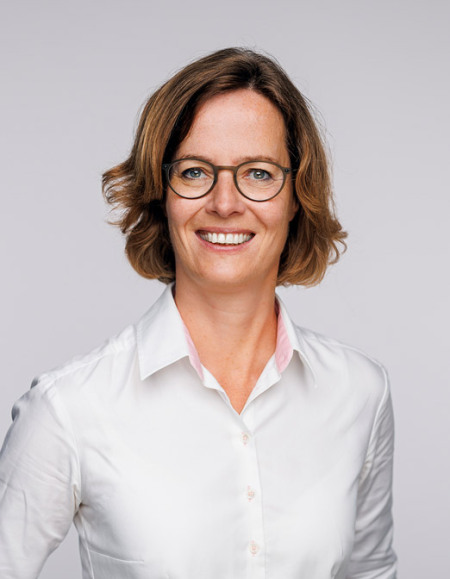
Frank Schorfheide is the Christopher H. Browne Distinguished Professor of Economics at the University of Pennsylvania and a Fellow of the Graduate Center of the DIW Berlin. He served as Chair of the Department of Economics from July 2018 to June 2021. He is also a Research Associate at the National Bureau of Economic Research (NBER) and a Research Fellow at the Centre for Economic Policy Research (CEPR). He has served on the editorial board (as co-editor) of the International Economic Review from 2005-2009 and as co-editor of Quantitative Economics from 2011-2018. He has been a Visiting Scholar at several central banks.
Schorfheide’s research areas are econometrics and empirical macroeconomics. Much of his work can be classified as macroeconometrics and is related to the Bayesian analysis of dynamic stochastic general equilibrium (DSGE) models. His research provides a set of tools that are useful for empirical work with modern macroeconomic models, including forecasting and policy analysis. He has applied these methods to analyze the sources of business cycle fluctuations and to study the effects of monetary policy. In recent years, he also has worked on forecasting with dynamic panel data models and on functional autoregressive models that capture the interaction of macroeconomic aggregates and cross-sectional distributions to inform heterogeneous agent modeling. More generally, his research has focused on the estimation of models with unobserved heterogeneity based on panel data. He has published papers in the American Economic Review, Econometrica, the Journal of Political Economy, the Review of Economic Studies, and many leading field journals. He co-authored a Princeton University Press book with Ed Herbst on “Bayesian Estimation of DSGE Models.”
Attendance Information
The lecture is in person only. There will be no livestream or recording.
Course Registration
If you are a student in the lecture course "Advanced Macroeconomic Analysis II (PhD Level)”, co-taught by Prof. Chi Hyun Kim and Prof. Ben Schumann, you are automatically registered for the lecture.
If you are an advanced doctoral student and want to participate, please write a short email with your name and affiliation to Ina Müller by May 1st.
Themen: Aus dem Institut